Why We Invested in Ubotica
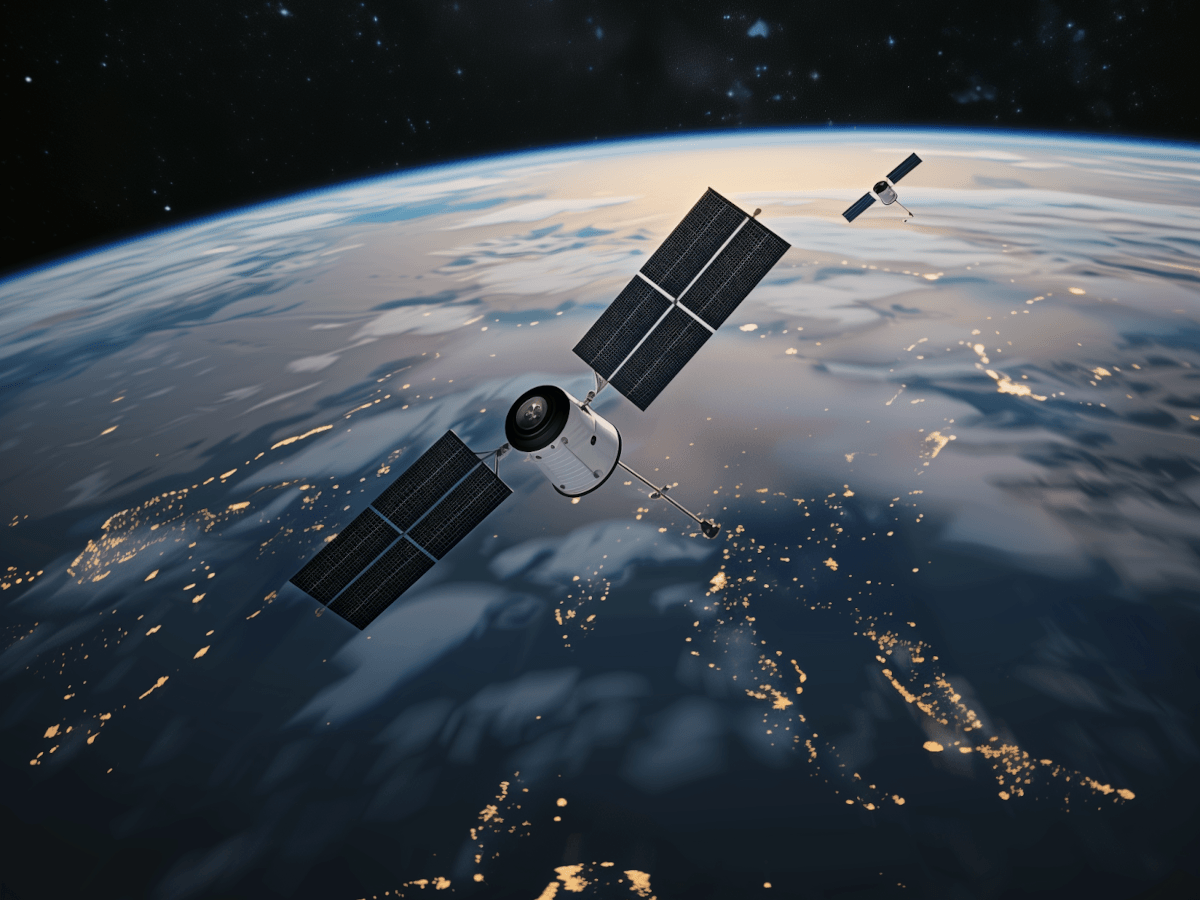
There is a quiet contradiction at the heart of the modern space economy. We have never been better at putting eyes in orbit. Thousands of satellites, ever-cheaper launch, sensors of extraordinary resolution. And yet most of what those satellites see is never used, and almost none of it is understood in time to matter.
Two problems sit underneath that. The first is bandwidth: a single Earth-observation satellite can generate more data in an orbit than it could ever transmit to the ground. The second is subtler and more important. No single sensor sees the whole picture. Optical cameras are blind through cloud and at night. Radar sees through both, but reads the world in an entirely different language. A ship's transponder can simply be switched off. The truth only emerges when you combine these signals, and the conventional architecture is the worst possible way to do that: downlink everything, queue it, fuse and process it in a data centre, deliver an answer hours later. By then the moment has passed.
Ubotica decided it was to fuse the data, and run the intelligence, in orbit.
Multimodal fusion, on-board
Ubotica builds the autonomous intelligence layer for satellites. Their CogniSat platform lets a satellite see, think and act in orbit, but the part that matters most is what it thinks about. Rather than treating one image stream in isolation, Ubotica's AI fuses across modalities: optical, radar, hyperspectral, and the signals ships themselves broadcast. A scene that would once have travelled to the ground as hundreds of megabytes of raw imagery leaves the satellite as a few kilobytes of fused, cross-referenced insight.
This is the heart of the thesis. Single-sensor Earth observation is a crowded, commoditising space. Multi-sensor fusion in orbit is a genuinely hard problem, and solving it changes what a satellite is for: not a camera that posts pictures home, but a node that reasons about everything it can perceive, in any weather, day or night, and acts on it.
The pattern is one we know from a decade of edge computing on Earth — as sensor data explodes, you move the intelligence to where the data is created. What makes Ubotica compelling is that they proved it works in the hardest possible environment, fusing multiple modalities under radiation, tight power budgets and no second chances. In September 2020, on ESA's Φ-Sat-1 mission, they ran the first hardware-accelerated AI inference ever to operate in orbit. Not a demo, a working capability, years before anyone else deployed comparable compute in space.
A platform, not a satellite
The second pillar of the thesis is what Ubotica does not need to own.
Rather than launching a fleet of its own, it orchestrates a virtual constellation: a growing pool of third-party satellites, spanning different operators and different sensor types, that Ubotica can task dynamically. The software decides which asset, with which sensor, should be looking where and when, then fuses what comes back.
It is multimodal by construction, because the constellation already spans optical, radar and more. Every new satellite the wider LEO economy puts up is a potential new node Ubotica can orchestrate.
Maritime is the wedge — and fusion is why it works
A platform thesis needs a beachhead, and Ubotica's is at sea.
The hardest problem in maritime security is the "dark vessel" — a ship that switches off its transponder precisely because it does not want to be seen. You cannot find it with any single feed. You find it by fusing: the radar return that shows a vessel present, cross-referenced against the transponder data that shows nothing broadcasting there. The anomaly is the answer. Doing that across a virtual constellation, in orbit, and turning it into an alert in minutes rather than hours, is the difference between situational awareness and a report about something that already happened.
This is not Ubotica competing for a slice of the existing Earth-observation market. It is closer to creating a new capability tier — autonomous, multimodal, in-orbit intelligence that drives how satellites are tasked, rather than analysts working through ground-processed imagery after the fact.
And the timing is not an accident. Europe is rearming, maritime and undersea infrastructure security has climbed the agenda after recent events, and there is a decisive push toward sovereign, European-built capability.
A team that has done the hard part before
Conviction in deeptech comes down to whether the team has earned the right to attempt something this difficult. Ubotica's has.
The founding group came out of Movidius, the vision-processing company acquired by Intel. Technology that now ships inside Intel's AI product lines. They designed the embedded AI architectures CogniSat is built on: fifteen-plus years of edge-AI heritage that cannot be assembled quickly by hiring or by spending. When experienced people in the sector are asked whether the large primes could simply replicate this, the consistent answer is that they could not, even with many times the engineering headcount, the classic innovator's dilemma. Distributed, low-power, radiation-tolerant, multi-sensor intelligence is a fundamentally different discipline from building a big centralised compute box.
The flight record backs this up: TRL-9 maturity across 11 missions, working partnerships with ESA and NASA.
The moat compounds
Three things reinforce each other here. The fusion software, refined across years of real missions in the hardest environment there is. The orchestration layer that coordinates a virtual constellation of satellites. And the body of in-orbit operational experience that simply cannot be acquired without having flown.
Each mission deepens all three. The constellation grows as the industry grows. Switching costs build once the software is integrated at the operator level. The moat is not a single patent or a single product, it is the accumulated, hard-won competence of being first, being multimodal, and being asset-light, all at once.
Why now
Ubotica sits at the intersection of three forces we have high conviction in: the migration of AI to the edge, the proliferation of satellites that makes on-board, multi-sensor intelligence essential rather than optional, and a generational shift in European defence and sovereignty spending.
We are proud to back the team building what comes next.